
Hardwood in Orem: What Holds Up Best in Utah Valley Homes
A practical Orem guide to choosing hardwood for Utah Valley’s dry air, winter snow, and real everyday wear. ([ncei.noaa.gov](https://www.ncei.noaa.gov/access/services/data/v1?dataTypes=MLY-TMAX-NORMAL%2CMLY-TMIN-NORMAL%2CMLY-TAVG-NORMAL%2CMLY-PRCP-NORMAL%2CMLY-SNOW-NORMAL&dataset=normals-monthly-1991-2020&format=pdf&stations=USC00420061))
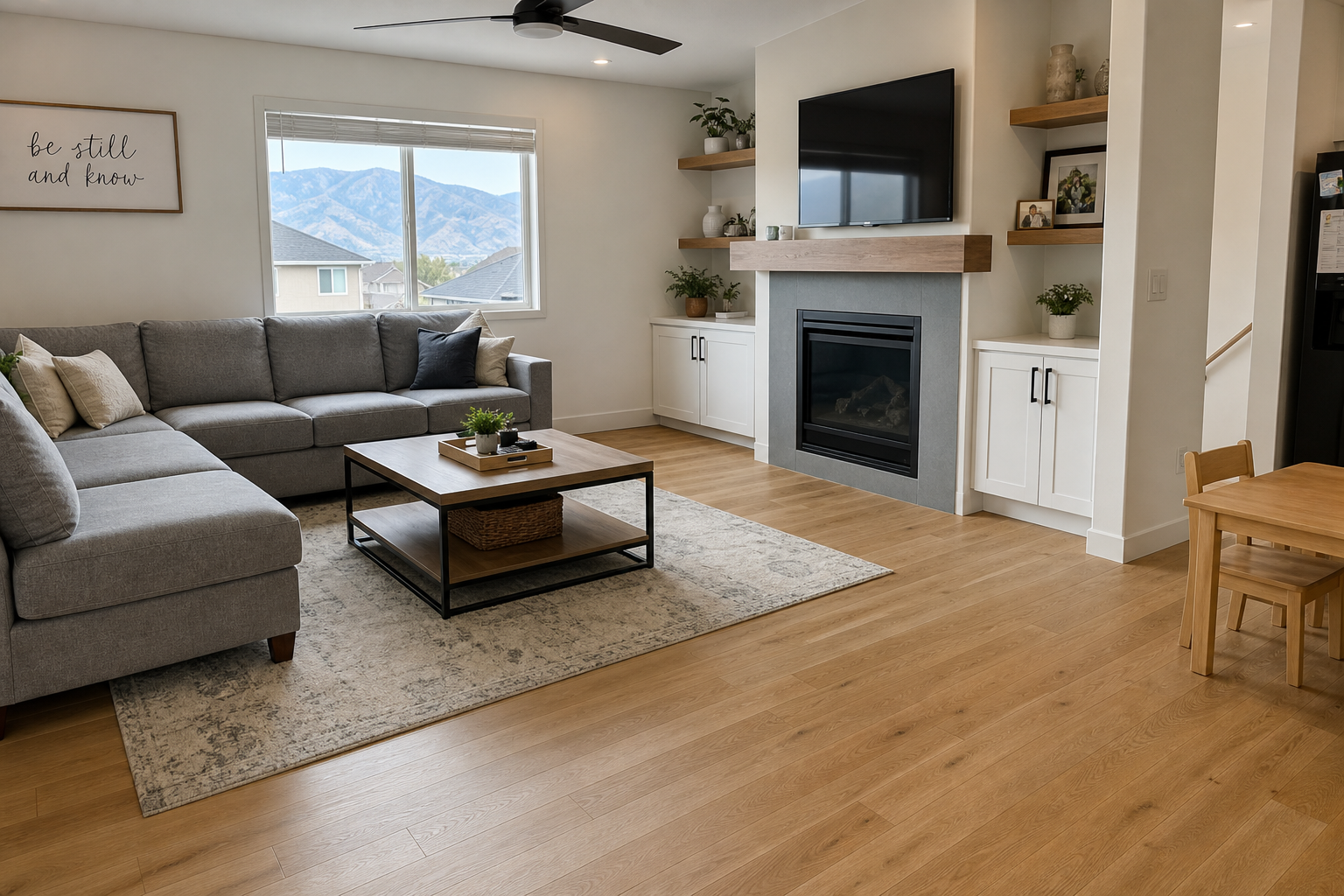
Hardwood in Orem: what actually holds up best?
Around our Orem showroom, hardwood conversations usually come down to the same practical question: what will still look good after a few Utah Valley winters, summer dust, and everyday traffic? That is the right question to ask. Nearby Alpine’s 1991–2020 NOAA normals show about 21.12 inches of annual precipitation and 74.4 inches of snowfall at a higher-elevation Utah Valley station, and NWFA notes that dry southwestern regions typically run lower interior wood moisture content than much of the country. In other words, our area is dry overall, but winter moisture and temperature swings are still very real. (ncei.noaa.gov)
For a lot of Orem homes, the best hardwood choice is not the trendiest one. It is the one that fits your subfloor, your humidity habits, and the way your family actually comes through the door.
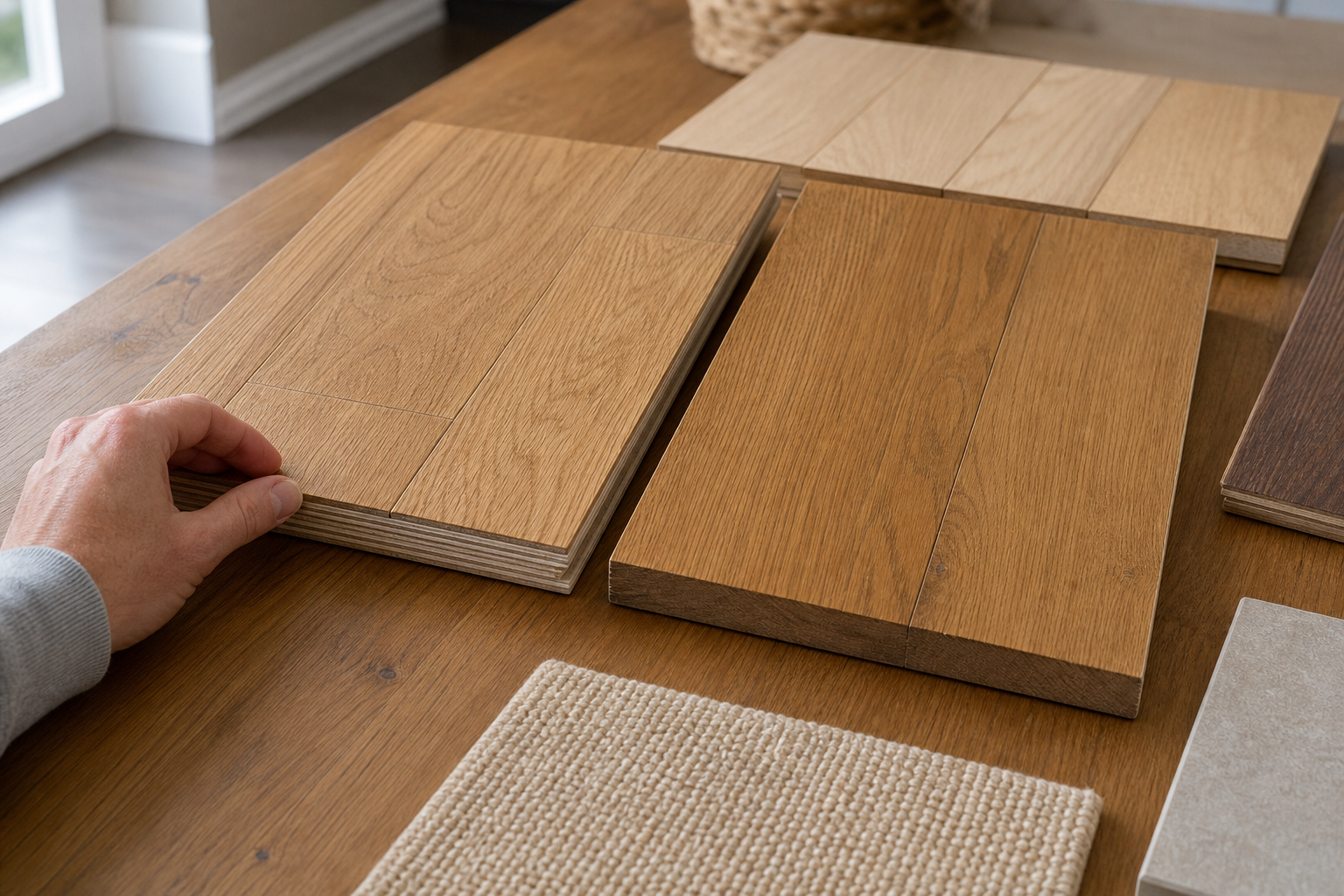
Start with the biggest local decision: solid or engineered
If your home has a main floor over concrete, a basement finish, or a walkout level, engineered hardwood usually deserves the first look. NWFA says engineered wood floors can be installed above grade, on grade, and below grade, while solid wood is generally limited to on-grade and above-grade installations unless the manufacturer says otherwise. That does not make engineered “less real.” It just means it is often the more flexible option for the way many Utah County homes are built. (nwfa.org)
Solid hardwood can still be a great fit, especially upstairs or over wood subfloors where the house stays fairly stable year-round. But here in Orem, I would not treat that as a default. I would treat it as a choice that needs a real humidity plan.
Local rule of thumb: if the room sits over concrete or tends to swing dry in winter, engineered hardwood is usually the safer conversation.
Utah Valley air changes the hardwood conversation
NWFA’s general guideline for solid wood flooring is an interior environment kept around 30% to 50% relative humidity and 60°F to 80°F, and the EPA also recommends keeping indoor humidity between 30% and 50%. When indoor air drops too dry during heating season, boards can shrink and gaps can show more. That is why a beautiful hardwood floor in October can look noticeably different by late January if the house is not being managed well. (nwfa.org)
In practical terms, that means a cheap hygrometer is worth having. If your indoor humidity dives every winter, a whole-home humidifier or even targeted room humidifiers can do more for your floor than a fancy cleaning product ever will.
The finish matters more than people think
For Orem households, I usually steer people toward matte or low-sheen finishes over high gloss. They tend to be more forgiving with fine dust, pet hair, sock prints, and the little scuffs that come from normal life. If you want a floor that feels current but not trendy, natural oak looks, soft mid-tones, and quieter grain patterns usually age better than very dark stain colors or anything too orange.
That is also why taking a sample board home matters. Utah Valley light can be sharp and change quickly through the day, especially in west-facing rooms. A color that looks warm and balanced in the showroom can go flat, pink, or overly yellow once it is next to your cabinets, wall paint, and afternoon sun.
Three mistakes that cause the most regret
1. Skipping the humidity plan
If you remember only one thing from this article, remember this one. Hardwood is not just a product choice. It is an indoor-environment choice. If your home lives outside the range your floor was made for, the floor will tell on you.
2. Treating acclimation like a formality
NWFA is very clear that wood flooring should not be installed over a known moisture condition, and that the flooring, subfloor, temperature, and humidity all need to align before installation. In some cases, if those conditions already match expected living conditions, flooring can go in right away. In other cases, it needs time and documentation. “Let it sit in the room overnight” is not a serious plan. (nwfa.org)
3. Ignoring the entry zone
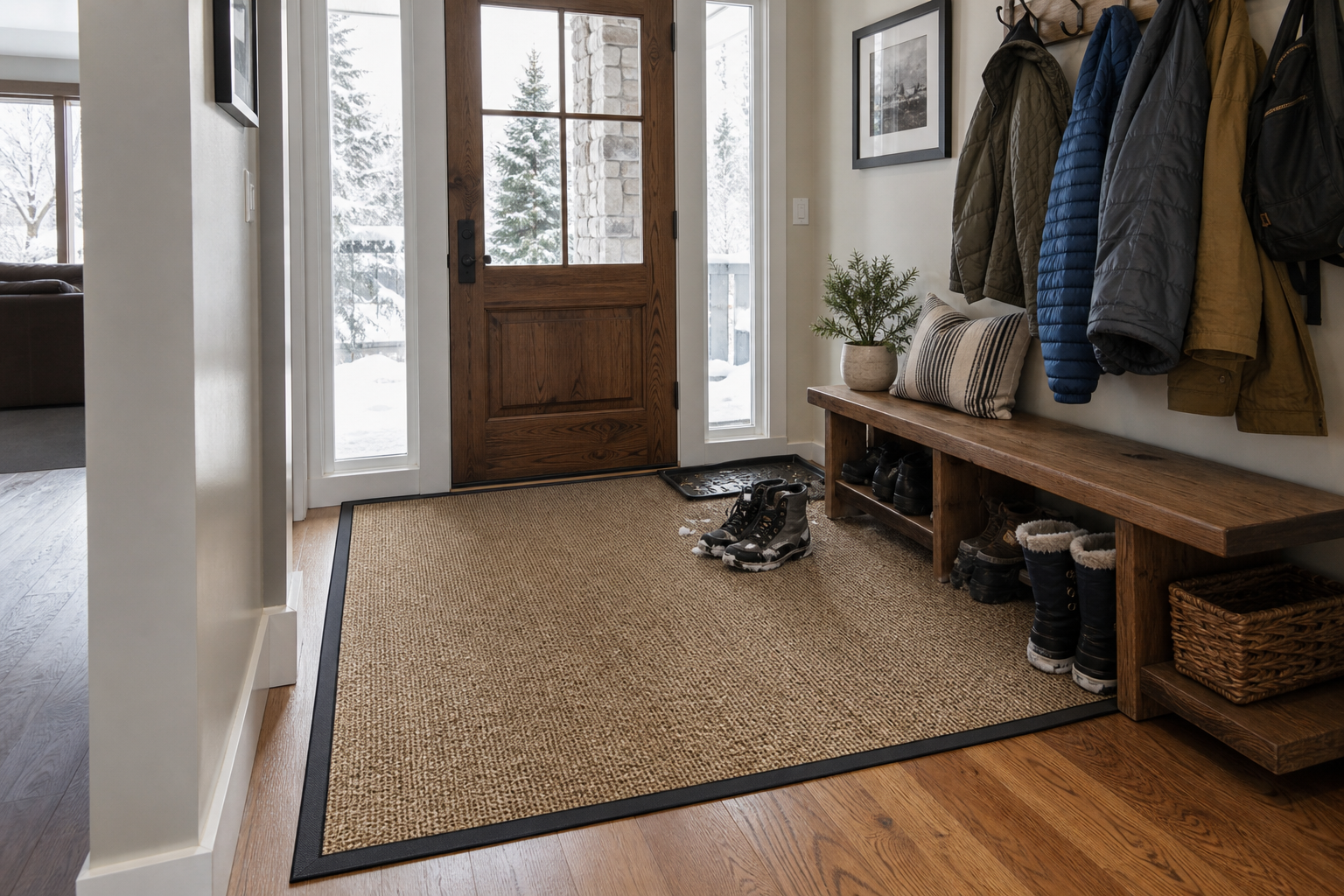
Even in a dry climate, winter boots, tracked-in snow, and small bits of grit are hard on wood. The smartest hardwood installs in Orem usually include a real landing zone at the door: a good exterior mat, an interior rug, and a habit of getting wet shoes off fast. If your busiest entry stays damp, that may be a better place for tile and a better place for hardwood to start just beyond it.
Where hardwood tends to work best in Orem homes
Hardwood is especially strong in living rooms, bedrooms, offices, upstairs hallways, and dining spaces where you want warmth without the visual busyness of patterned surfaces. It also works beautifully in open main areas when you want one material to carry the space and make it feel less chopped up.
I’m usually more cautious in full bathrooms, laundry areas, or any room where standing water is a regular part of life. That does not mean hardwood can never be nearby. It just means the transition between materials should be intentional instead of forced.
A smarter way to shop locally
Before you choose a species or color, bring three things with you: room measurements, a photo of the cabinetry or fireplace nearby, and one honest answer about how your household actually lives. Do you have dogs? Kids running in from the yard? A front entry that gets wet in winter? A house that feels desert-dry by February? Those answers matter more than whether a board is labeled “modern farmhouse” or “European inspired.”
And before you commit, take the sample home. Look at it in morning light, late afternoon light, and with the lamps on at night. The best hardwood choice for an Orem home is usually the one that feels calm, durable, and believable in your space, not the one that shouts the loudest on a display wall.