
How Utah Valley Weather Should Shape Your Flooring Plan in Orem
A practical room-by-room guide for Orem homeowners choosing flooring that can handle dry air, winter snow, basement slabs, and real remodel logistics.
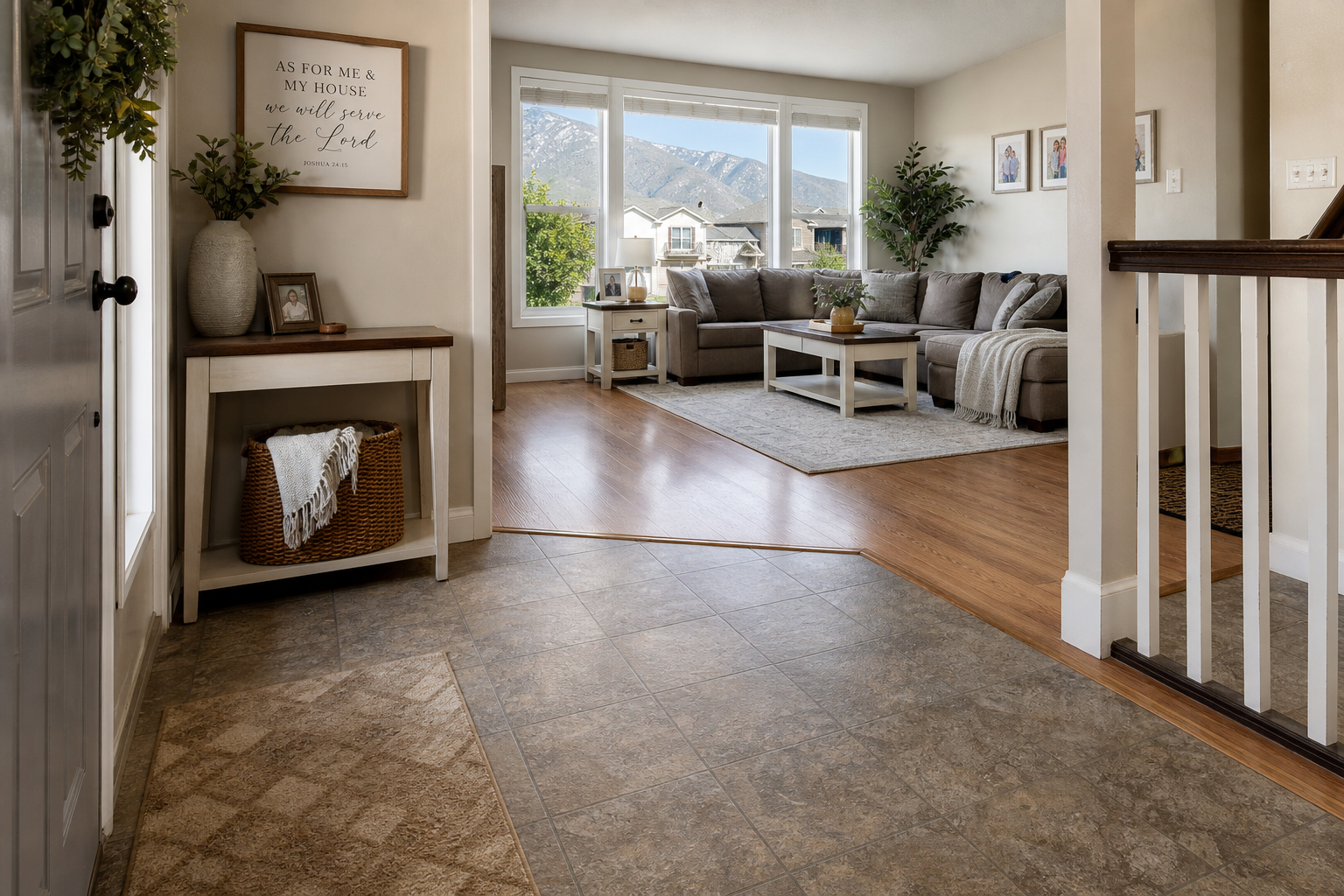
If you live in Orem, flooring has to survive two opposite conditions: very dry air for much of the year and tracked-in moisture during snow season. In nearby Pleasant Grove, NOAA’s 1991–2020 climate normals show average July highs around 93.4°F, about 16.43 inches of annual precipitation, and about 41.4 inches of annual snowfall. Utah State University also describes Utah as semi-arid, with very hot, dry summers and cold, snowy winters. That combination is why a floor that looks perfect online can behave very differently in a real Utah Valley house. (ncei.noaa.gov)
Start with the rooms that take the hit
In most Orem homes, the floors that work hardest are the front entry, kitchen, hallway, and any basement space with garage access. Those areas take winter slush, summer dust, and daily traffic. If you choose one material for the whole house just to keep things simple, that convenience can come back to bite you. A better plan is matching the floor to the room.
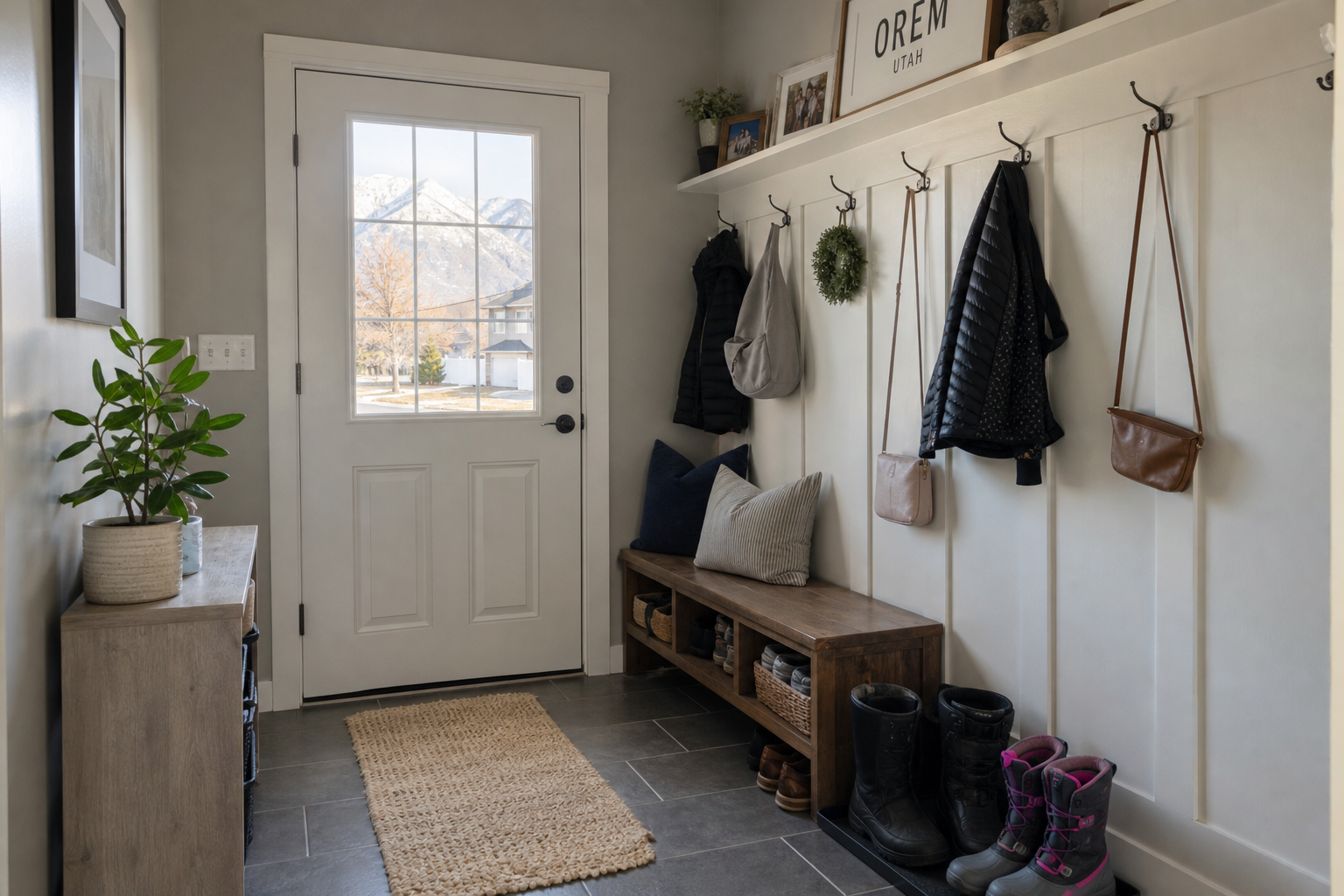
Where each flooring type usually makes the most sense
Entry, mudroom, laundry: This is where tile and other waterproof surfaces usually earn their keep. They are easier to clean after wet shoes, muddy cleats, or dog paws, and they hold up well in the repeated wet-dry cycle that comes with Utah winters. (ncei.noaa.gov)
Kitchen and main-path areas: If you want something warmer underfoot than tile, waterproof resilient flooring can be a practical middle ground. It is often a more forgiving everyday choice than solid hardwood right next to a sink, dishwasher, or patio door.
Living rooms and bedrooms: Wood can be beautiful here, but Utah’s dry conditions make installation details matter. Shaw says hardwood should be installed with the HVAC running and indoor conditions maintained around 65°F to 75°F with 35% to 55% relative humidity. The National Wood Flooring Association also recommends checking and recording jobsite ambient conditions and subfloor moisture before installation. (shawfloors.com)
Basements: This is where shortcuts show up fast. NWFA says concrete subfloors must be moisture tested and that adequate moisture-control systems should be in place before wood flooring goes in. So if a basement slab has not been tested, the flooring decision is not really finished yet. (nwfa.org)
Local rule of thumb: In Orem, the smartest flooring plan is usually not one floor everywhere — it is the right floor for the wet spots, the warm spots, and the basement.
The wood-floor question to ask first
Not, “What color do I want?” Ask, “What will my indoor humidity look like in January and August?”
That sounds minor, but it is often the difference between a floor that stays stable and one that starts showing seasonal movement. Utah State University repeatedly describes Utah as arid or semi-arid with cold winters, and Shaw’s hardwood guidance makes the humidity target explicit. That is one reason many homeowners here end up comparing engineered hardwood more seriously than solid hardwood, especially over basements or in homes with bigger seasonal swings. (extension.usu.edu)
One permit note that can save you a headache
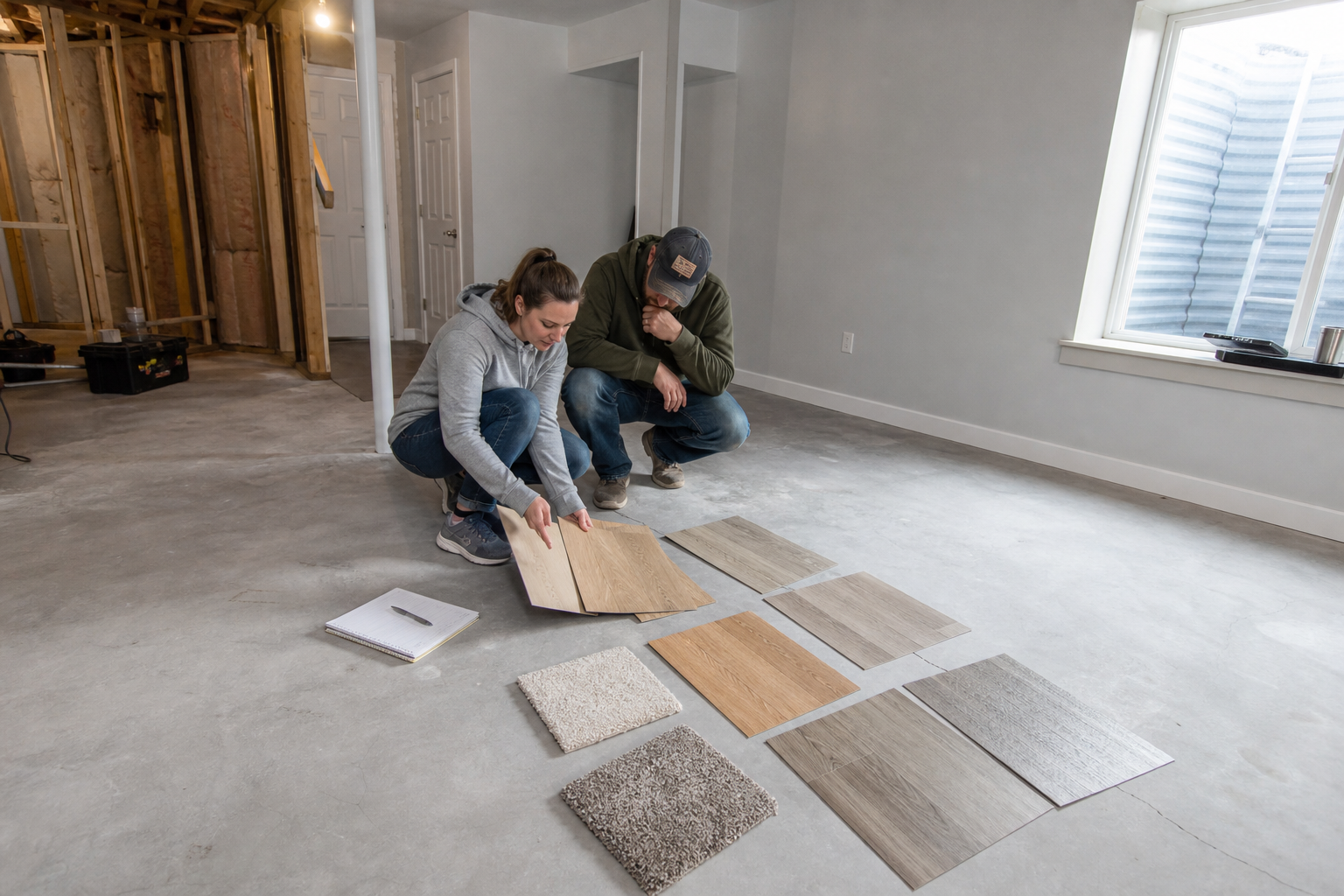
Orem’s permit guide says floor covering installations do not require a building permit. But once the project becomes a true remodel, the rules change. Structural modifications, basement finishes, and remodels involving moving walls, windows, or doors do require permits. Orem’s Building Safety Division also says staff can help answer code-related questions early, which is worth doing before demo starts instead of after. (orem.gov)
Four things to bring before you choose
- A photo of the room at its brightest and darkest time of day.
- A cabinet door, paint chip, or countertop sample.
- A quick note about what is under the existing floor: wood subfloor, concrete slab, old tile, or something else.
- Your honest traffic story: kids, pets, skis, cleats, basement gym, aging parent, rental unit — whatever is actually true in your house.
Those four things usually narrow the decision faster than fifty saved inspiration photos.
What a smart Orem flooring mix often looks like
For a lot of Utah Valley homes, the practical answer ends up being a mix: durable waterproof flooring at the entry and kitchen, softer or quieter flooring where comfort matters most, and extra caution with any wood product over concrete or in very dry interiors. It is not the flashiest answer, but it is usually the one that still feels right after a snowy Saturday, a dry August afternoon, and a few thousand trips in from the garage. (ncei.noaa.gov)