
Plan Ahead for Your Arizona Tile Project to Avoid Delays and Costly Mistakes
A tile project needs more planning than most homeowners expect, especially during the Valley's August heat and monsoon season. This guide explains how to confirm scope, order matching material, allow for prep and cure time, and how TL Floor & Design Scottsdale can help avoid delays and costly mistakes.
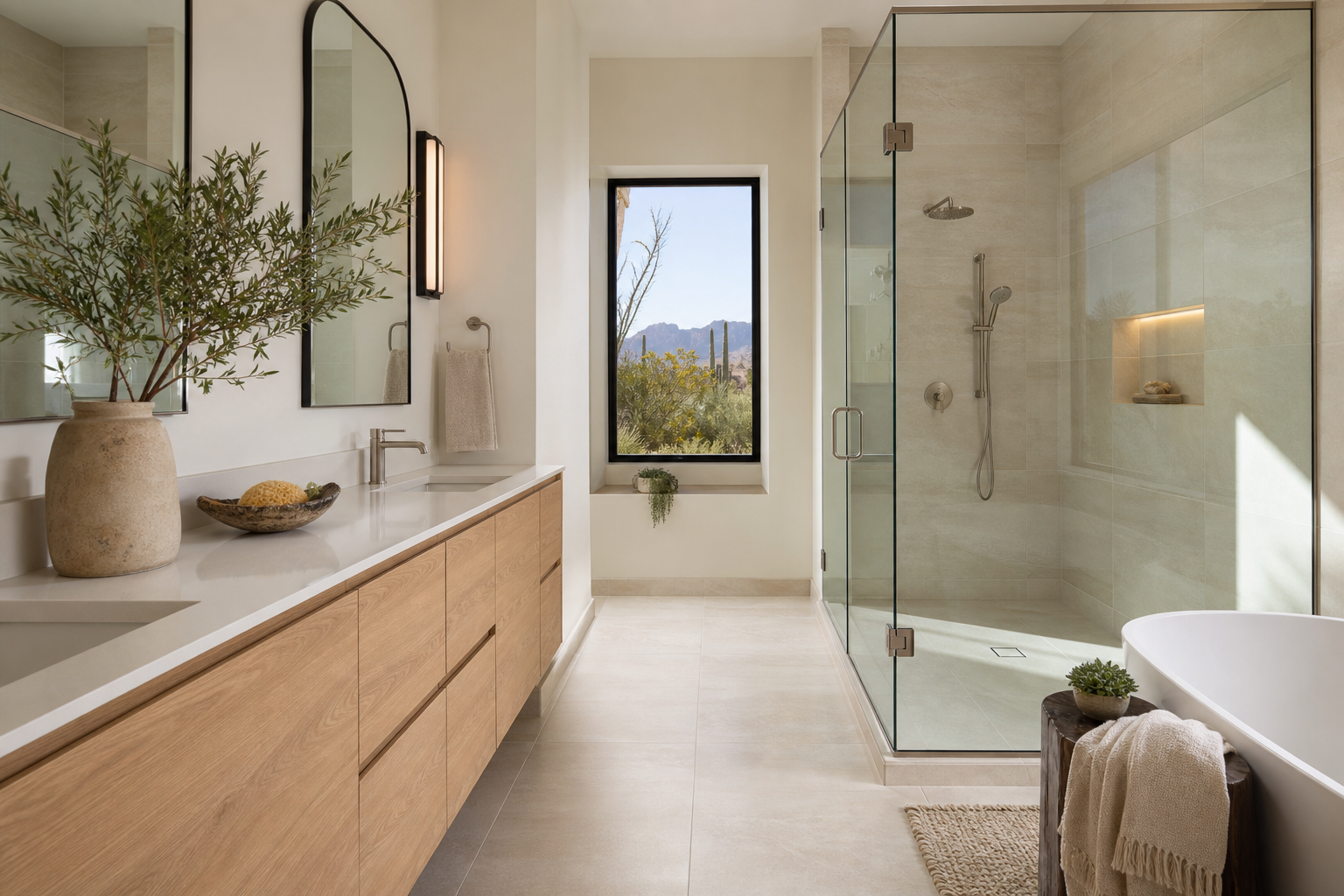
Planning ahead is key to a successful tile project
Any given Valley Sunday in August, the local forecast calls for highs near 110°F, late-day thunderstorms, and dust-storm risk. Arizona's official monsoon season runs from June 15 through September 30. Scottsdale also keeps monsoon storm response crews active through summer because runoff, debris, sand, and vegetation can affect roads after storms. For a tile project, that is a good reason to build in buffer days instead of assuming every delivery, install day, and follow-up trade will run perfectly on cue. (weather.gov)
At TL Floor & Design Scottsdale, Joani Woelfel and the team assists homeowners, designers, contractors, builders, and architects in sourcing the ideal materials for their projects, and the showroom specifically invites shoppers to bring measurements, photos, and rough finish ideas to narrow the material direction before ordering. If you are planning a backsplash, bathroom floor, shower surround, or a larger tile update, that early planning conversation can prevent a lot of expensive guesswork later.
Lock the scope before you order a single box
Selecting tile requires attention to details including edge trim, shower-floor mosaic, niche tile, transition pieces where tile meets adjacent flooring, grout, sealant, and sometimes a different slip-resistant surface for wet areas.
If you are heading to the Scottsdale showroom, bring room dimensions, a few photos, and a simple list of what is changing and what is staying. Choose porcelain, laminate or hardwood flooring based on the type of application — is it a kitchen or bathroom where slip resistance is a must? Ceramic and porcelain tiles in myriad colors and textures are ideal for backsplashes, accent walls and shower walls.
Order everything at once to ensure consistent shade and size
Manufacturers track tile by shade (also called dye lot) and caliber (facial size). Expect slight variation from one production run to the next so buying the same shade and calibration helps keep color and grout joints consistent. We also recommend buying about 10% extra as “attic stock” so future repairs can use material from the same dye lot and printing process. (marazziusa.com)
It is much easier to store a few spare boxes in the garage than it is to hunt for a close-enough match a year later.
Scottsdale shortcut: Order all of the tile including trim, grout, and extra boxes, before demo day.
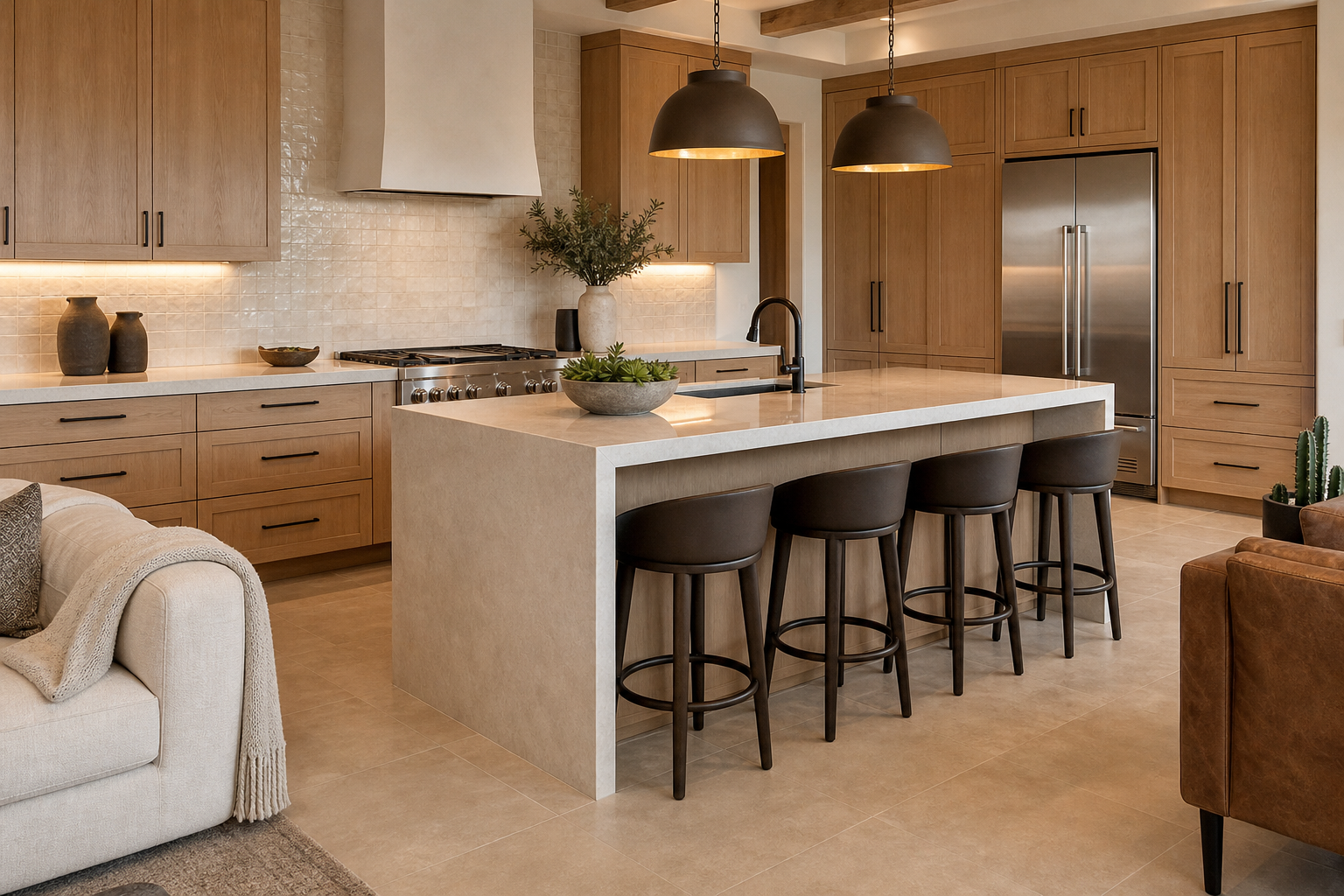
Leave time for prep, especially with large-format tile
Large-format porcelain gives bathrooms and living spaces a clean, uncluttered look, but it asks more from the installer than smaller tile does. Manufacturers' installation guidance says large-format tile needs careful substrate prep, a level surface, at least 90% mortar contact, and a minimum 3/16-inch grout joint. That means the slab or subfloor has to be ready before the tile ever comes out of the box. (daltile.com)
This is where rushed timelines get expensive. If the floor is out of plane, if old flooring leaves behind adhesive or damage, or if a shower needs waterproofing corrections, the right answer is usually more prep, not faster setting. That is not wasted time. It is what protects the finished result.
Do not skip the movement-joint conversation
The Tile Council of North America says movement joints are needed in tile installationd to handle expansion and contraction, and that interior installations need them more frequently where moisture or direct sunlight is expected. TCNA also notes that changes in the plane of the substrate are one of the conditions that can subject tile to stress. In a Scottsdale home, that matters around sun-loaded rooms, perimeter edges, big sliders, and places where tile meets restraining surfaces. (tcnatile.com) TCNA notes that movement joints use sealants that allow contraction and expansion, not the same rigid grout used everywhere else. (tcnatile.com)
TCNA notes that movement joints use sealants that allow contraction and expansion, not the same rigid grout used everywhere else. (tcnatile.com)
Respect cure time before you schedule the next trade
Another common mistake is booking the glass company, plumber, painter, or move-in crew too aggressively. Grout and sealers need time, and the timeline depends on the exact products being used. MAPEI lists a 3-day curing time for Ultracolor Plus FA under standard conditions, while LATICRETE says PERMACOLOR in submerged applications or steam rooms should cure for 14 days before water exposure. LATICRETE also generally recommends a minimum 48 hours before sealing cement-based grout, subject to the sealer manufacturer’s instructions. (cdnmedia.mapei.com)
Not every shower takes two weeks, the schedule should be built around the actual system, not around hope. If your installer says the shower is ready for the next step on Thursday, believe Thursday, not Tuesday.
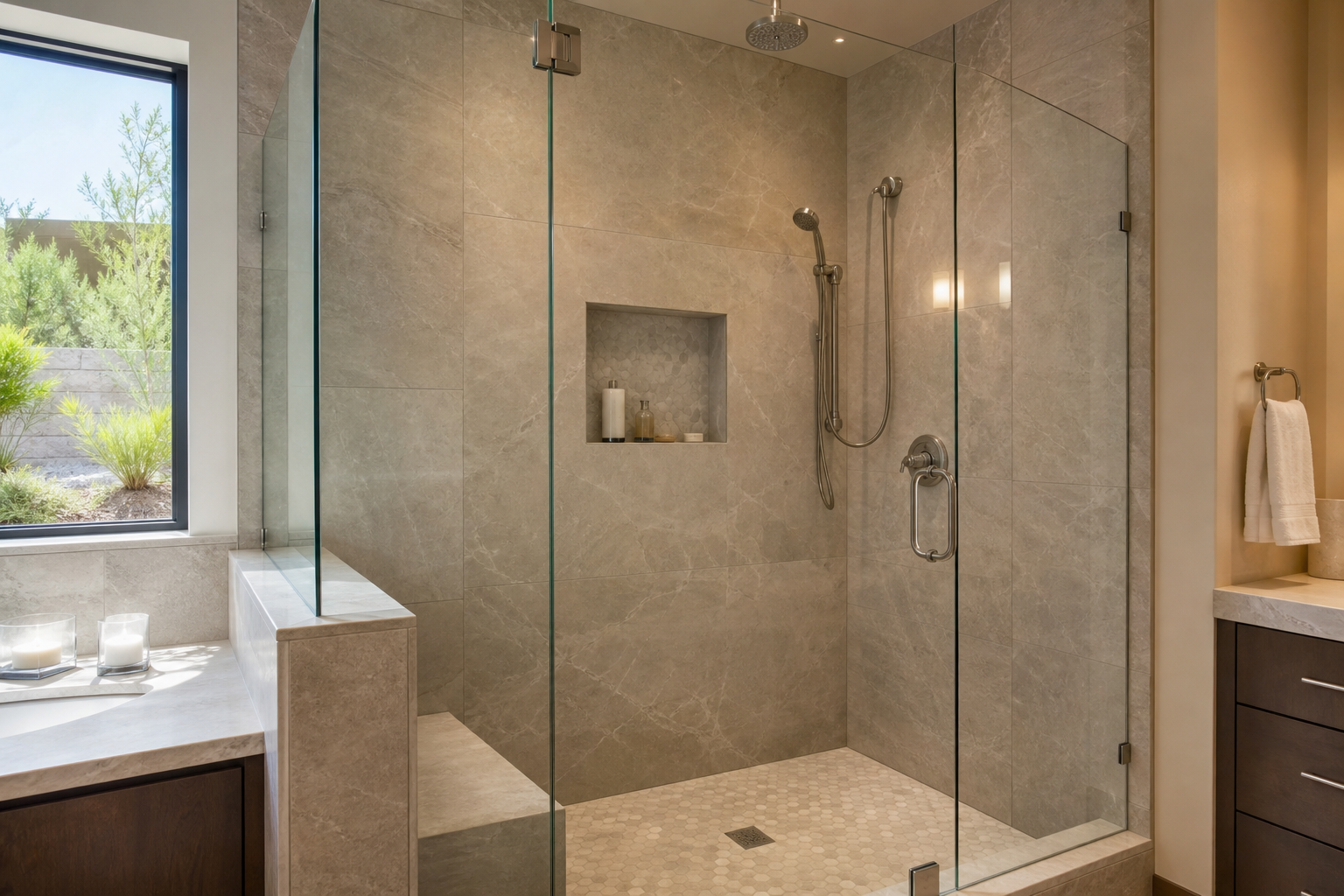
Use the showroom visit to prevent change orders
TL Floor & Design Scottsdale assists customers with their project planning. The showroom asks shoppers to bring measurements, photos, and rough finish ideas, and the local team can help narrow the material direction before the order is placed. That is especially useful if your tile project overlaps with adjacent hardwood, LVP, carpet, natural stone, or countertop decisions elsewhere in the home. (tlflooranddesignscottsdaleaz.com)
A productive showroom visit usually includes:
- rough room measurements
- a few photos in natural and artificial light
- cabinet, paint, or countertop references
- installer questions about layout, grout width, trim, and transitions
- your real deadline, not the ideal one
A practical project timeline
For most homeowners, the safest sequence looks like this:
- Choose the room and scope.
- Select the full tile system, not just the face tile.
- Confirm availability before demo begins.
- Reserve installation around material arrival, not wishful timing.
- Allow for prep, setting, grout, and cure.
- Schedule follow-up trades only after the tile installer signs off.
If you want a second set of eyes before you start tearing anything out, TL Floor & Design Scottsdale is at 15475 N Greenway Hayden Loop Ste B1. A short planning visit at the outset helps avoid reordering, a rushed install, or a shower that has to be redone later. (tlflooranddesignscottsdaleaz.com)